
28 Mar Building a Solid Bridge Pose (Yoga in Heston, Hounslow)
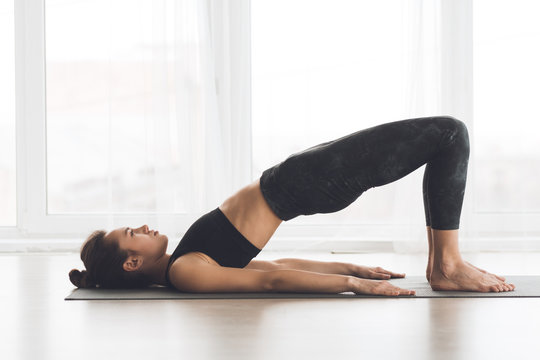
Known in Sanskrit as Setu Bandha Sarvangasana, the bridge pose is a foundational backbend that offers us a wealth of benefits, from strengthening the posterior chain to opening the chest and shoulders.
It is an accessible inversion that helps to counter the effects of prolonged sitting by stretching the hip flexors and mobilising the spine.
Preparing for the Pose
Before beginning, ensure you are practicing on a firm, non-slip yoga mat. It is best to perform this posture on an empty stomach. If you have any neck injuries, please consult a professional before attempting this, and avoid moving your head from side to side once you are in the lift.
Step-by-Step Instructions
-
-
Starting Position: Lie flat on your back with your arms resting alongside your body, palms facing down. Bend your knees and place your feet flat on the floor, hip-width apart. Ensure your heels are pulled in close to your sit-bones; you should just be able to graze the backs of your heels with your fingertips.
-
The Lift: Inhale deeply. As you exhale, press your inner feet and arms actively into the floor. Push your tailbone upwards towards the pubic bone, firming the buttocks, and lift the buttocks off the floor. Keep your thighs and inner feet parallel—do not let the knees splay outwards.
-
Clasping the Hands: Reach your arms underneath your torso and interlace your fingers. Extend the arms through the little-finger side of the hand to help you stay on the tops of your shoulders. If interlacing the fingers is uncomfortable, keep the palms flat on the mat.
-
Refining the Alignment: Lift your buttocks until the thighs are about parallel to the floor. Keep your knees directly over the heels. Push your chest towards your chin, but do not move the chin towards the chest. Instead, keep the chin slightly away from the breastbone to maintain the natural curve of the neck.
-
Benefits of the Bridge
Practising this pose regularly can lead to several physical and mental improvements:
-
Strengthens: Focuses on the back, glutes, and hamstrings.
-
Stretches: Opens the chest, neck, spine, and hips.
-
Calms: Known in yoga tradition to help reduce anxiety and fatigue by rejuvenating the nervous system.
-
Digestion: Gently stimulates the abdominal organs.
Modifications and Variations
If you find it difficult to support the lift of the pelvis, slide a yoga block under your sacrum (the bony part at the base of your spine) and rest your weight on it. This creates a “Supported Bridge,” which is more restorative.
To challenge yourself, try the Eka Pada Setu Bandha Sarvangasana (One-Legged Bridge). While in the full pose, exhale and lift your right knee into the chest, then extend the leg straight up towards the ceiling. Hold for thirty seconds, then repeat on the left side.
Coming Out of the Pose
To exit, exhale and slowly roll the spine down onto the floor, vertebra by vertebra. Start from the upper back and finish with the tailbone. Allow your knees to knock together for a few breaths to neutralise the lower back before moving on to your next posture.
No Comments