
21 Mar Opening Up Our Hips Safely (Yoga in Heston, Hounslow)
The hips are often described as the emotional junk drawer of the body, where we store the physical tension of a long day at a desk or the lingering stress of a busy week. While hip-opening sequences are some of the most requested in a yoga class, they also require a high level of mindfulness to ensure the joints remain protected. Understanding how the hip operates is the first step toward a more comfortable and effective practice.
Clarifying the Anatomy of the Hip
To practice safely, it is helpful to define exactly what we mean by hip opening. The hip is a ball and socket joint where the femur, or thigh bone, meets the pelvis. This joint is designed for a wide range of movement, but it is held together by very strong ligaments, which are the tough tissues connecting bone to bone. When we talk about opening the hips, we are usually referring to stretching the muscles surrounding this joint rather than the ligaments themselves.
One of the most important muscles involved is the psoas, a deep muscle that connects the lower spine to the top of the thigh bone. It is the primary hip flexor, meaning it is the muscle that allows you to lift your knee toward your chest. Another key group is the adductors, or the inner thigh muscles, which help pull the legs together. When these muscles are tight, they can pull the pelvis out of alignment, leading to discomfort in the lower back or knees.
The Relationship Between the Hip and the Knee
The most vital safety rule in hip opening is to protect the knee. The hip is a mobile, circular joint, while the knee is a hinge joint designed primarily to move back and forth. When the hips are tight and we try to force a pose like Pigeon or Butterfly, the body often tries to find that missing mobility by twisting the knee. This can lead to strain on the delicate ligaments of the knee.
To prevent this, one should always keep the foot flexed in poses where the hip is in external rotation, which means the thigh is turned outwards. Flexing the foot engages the muscles around the lower leg and helps to stabilise the knee joint. If you ever feel a pinching or pulling sensation inside the knee during a hip stretch, it is a clear signal from the body to back out of the pose immediately.
Alignment and the Pelvis
A safe hip opener requires a stable foundation in the pelvis. If the pelvis is tilted or uneven, the stretch will not reach the intended muscles and may instead put pressure on the sacroiliac joints, which are the points where the base of the spine meets the pelvis. In seated hip openers, it is often helpful to sit on the edge of a folded blanket or a foam block. This slight elevation allows the pelvis to tilt forward naturally, which creates more space and reduces the urge to round the lower back.
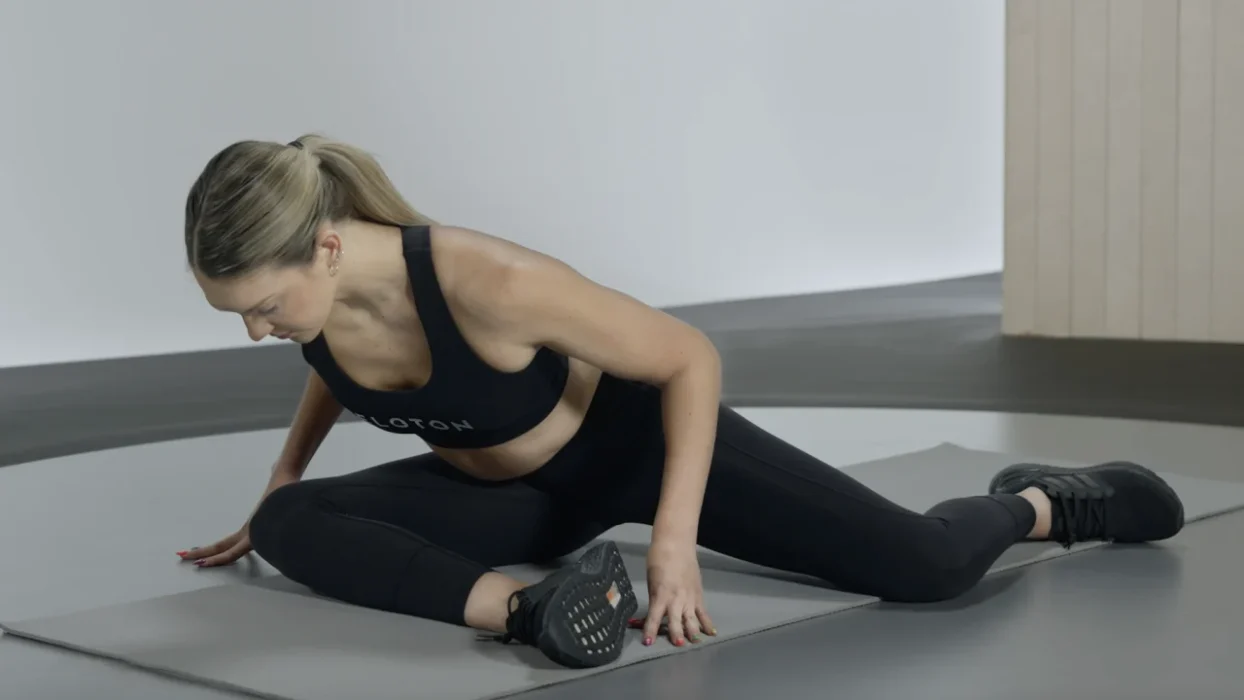
In poses where one leg is extended behind, such as Lizard or Pigeon, the aim should be to keep the hips square, meaning both hip bones are facing the same direction. Using props like cushions or blocks under the hip of the bent leg can provide the necessary support to keep the pelvis level, ensuring the stretch remains focused on the muscles rather than the joints.
Consistency Over Intensity
It is a common misconception that a stretch must be intense or painful to be effective. In fact, the opposite is often true. When we push too hard into a hip opener, the nervous system may perceive the sensation as a threat and cause the muscles to contract even further as a protective mechanism. This is known as the stretch reflex.
A more effective approach is to find a level of sensation that feels like a gentle tug rather than a sharp pull. By staying in a pose for several breaths and focusing on a long, slow exhale, the body is encouraged to relax. Over time, this consistent and gentle pressure allows the fascia, the connective tissue that surrounds the muscles, to gradually lengthen and release.
Balancing Flexibility with Strength
While stretching is important, a truly healthy hip joint also needs to be strong. Relying solely on passive stretching can lead to hypermobility, where the joint becomes too loose and unstable. Incorporating standing poses like Warrior Two or Goddess Pose helps to strengthen the glutes and the external rotators of the hip. This strength provides a stable framework that allows the muscles to stretch more safely.
Moving through a variety of different movements, such as internal rotation where the thighs turn inwards, ensures that the hip joint is worked through its full range of motion. A balanced practice that includes both active strength and passive release is the most sustainable way to improve hip mobility.
Resting After Deep Hip Work
Just as with backbends, the body needs time to integrate the changes after deep hip work. Following a sequence of hip openers, it is beneficial to spend a few moments in a neutral position. Resting with the legs extended straight or taking a gentle twist can help to reset the pelvis. This transition period allows the muscles and connective tissues to settle before you return to your daily activities.
No Comments